Beyond Kyoto: Discover Japan’s “Little Kyotos” — 5 Hidden Gems for an Authentic Historical Escape
Hi, there! I’m Cochi.
In recent years, “over-tourism” in Kyoto has become a huge topic.
I often hear from my students, “I couldn’t book a hotel!” or “All the good restaurants are full!” 👀🌀
But don’t worry—Japan has so many other incredible hidden gems!
While Kyoto is buzzing right now, why not visit these “off-the-beaten-path” spots and become a true Japan connoisseur? 👓🎓
What is “Little Kyoto”?
From the Muromachi period to the Sengoku period, feudal lords across Japan began mimicking the city planning of Kyoto—then the ultimate cultural center—to showcase their own authority.
This was called “Kyo-utsushi” (Moving Kyoto).
By adopting Kyoto’s culture, they wanted to prove that their land was a place of high education and refinement, rather than just “wild countryside.”
Towns that adopted this Kyoto-style culture are known as “Little Kyoto.”
The 3 Criteria of a Little Kyoto
-
Scenic Beauty: Having natural landscapes or streetscapes similar to Kyoto.
-
Historical Connection: Having deep historical ties to Kyoto.
-
Traditional Culture: Preserving traditional crafts or performing arts.
Types of Little Kyoto
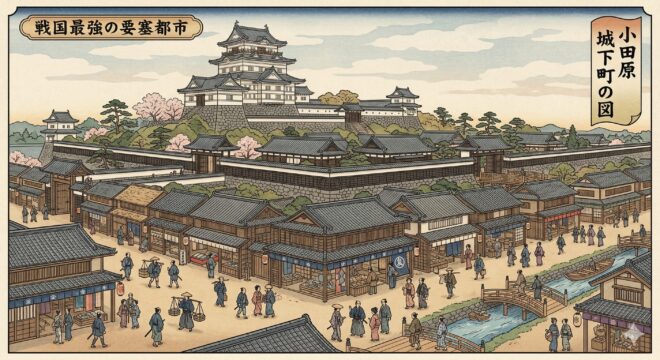
- Castle Town (Jokamachi)
![]()
This is a classic image of a ‘Jokamachi’ (Castle Town). The closer you lived to the castle, the higher your samurai rank was. It really shows how Japan’s strict social structure was built right into the town layout!
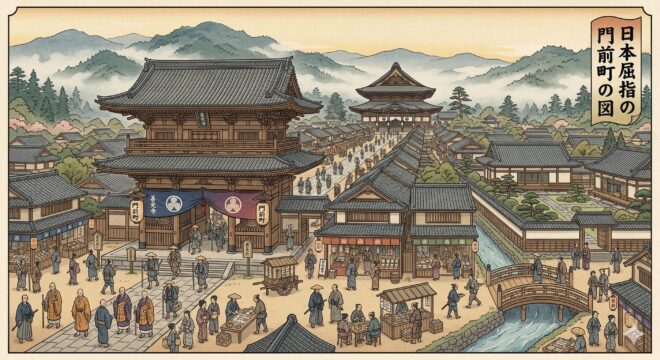
Ex) Kanazawa (Ishikawa), Hagi (Yamaguchi) - Temple Town (Monzen-machi)
This is a ‘Monzen-machi’ (Temple Town). While ‘Jokamachi’ were built to protect castles, ‘Monzen-machi’ were built to welcome people to temples. Instead of samurai, you can see these streets were bustling with monks and many pilgrims! Ex) Iida (Nagano), area around Zenko-ji Temple![]()
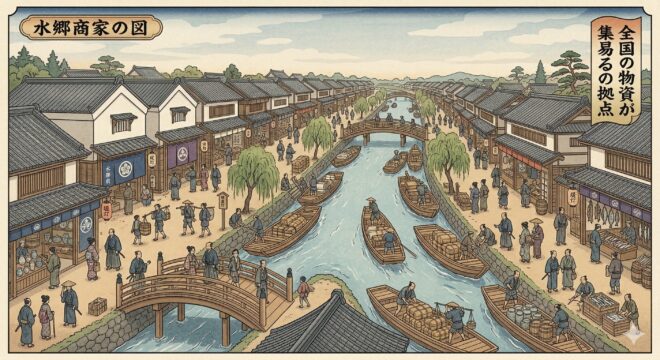
- Canal & Merchant Town (Suigō-Machi / Shōka-Machi)
![]()
This is a ‘Suigō-Machi’ (Canal/Merchant Town). While ‘Jokamachi’ protected castles and ‘Monzen-machi’ was centered on faith, this was the hub of Japan’s economic activity. Do you see how the canals and white ‘Kura’ (storehouses) create the landscape, rather than castles or grand mountains? Ex) Kurashiki (Okayama), Gujo Hachiman (Gifu)
Recommended Little Kyotos
1. Kanazawa (Ishikawa Prefecture)
Known as the “Little Kyoto of Hokuriku.”
This “million-koku” castle town boasts an elegance that rivals Kyoto, featuring charming tea districts and Kenrokuen—one of Japan’s three most beautiful gardens.
Since the 2024 earthquake, tourism as a form of reconstruction support is encouraged.
Kenrokuen in the early morning is breathtakingly quiet.
2. Hida Takayama (Gifu Prefecture)
The “Little Kyoto of Hida.”
It preserves an old townscape from the Edo period and is rich in craft culture, like woodwork and lacquerware.
It’s more compact and easier to walk than Kyoto, and the Miyagawa Morning Market is perfect for a refreshing “Asakatsu” (morning activity).
3. Tsuwano (Shimane Prefecture)
The “Little Kyoto of San’in.”
The contrast between the white earthen walls and the carp swimming in the canals is beautiful.
It’s the hometown of the great literary figure Mori Ogai.
Located in the mountains, it sees fewer tour groups, allowing you to enjoy a stillness where time feels frozen, occasionally accompanied by the steam of the SL “Yamaguchi” locomotive.
4. Kurashiki (Okayama Prefecture)
The Kurashiki Bikan Historical Quarter.
Lined with traditional storehouses along the canal (reminiscent of Fushimi in Kyoto), it has a deep history as a hub for the “Mingei” folk art movement.
The evening illumination is stunning, and a quiet night stroll—exclusive to those staying overnight—is an absolute must.
5. Gujo Hachiman (Gifu Prefecture)
The “City of Water.” In addition to its castle town charm, the way the canals are integrated into daily life offers a refreshing coolness. It’s not over-commercialized, so you can see authentic glimpses of Japanese history mixed with daily life, like locals washing vegetables in the crystal-clear waterways.
関連情報