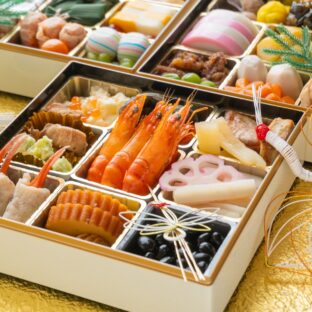
Japanese New Year Food: The Meaning Behind “Osechi”
Do you know about “Osechi-ryoori” (おせち 料理)?
It is a special meal eaten during the first three days of the New Year in Japan.
The Origins of Osechi
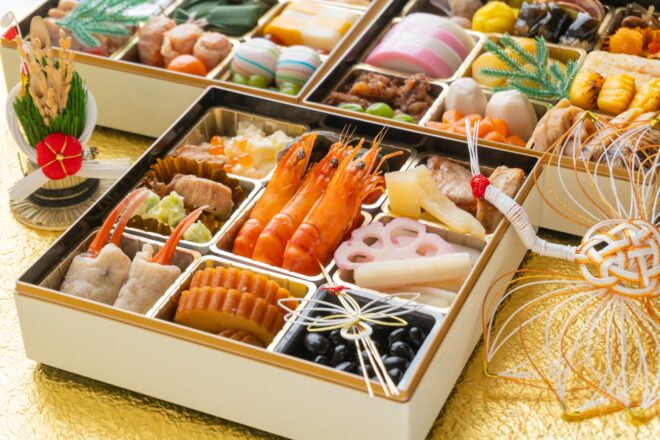
The tradition of Osechi began in the Heian period (794–1185).
Originally, it was an offering to the gods to celebrate the changing of the seasons. Over time, it became a tradition to eat these specially prepared dishes during the New Year to give the “God of the Year” a warm welcome and to give busy families a break from cooking during the first few days of January.
Each dish in the Osechi box (called Juubako) has a special meaning, representing wishes for health, prosperity, and happiness.
Let’s look at some popular items!
1. Kuromame (黒豆 / Black Beans)
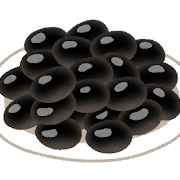
Meaning: Health and Hard Work
“Mame” also means “health” or “faithfulness” in old Japanese.
Eating these black beans represents a wish to work hard and live healthily (mame-ni-hataraku) in the coming year.
2. Kazunoko (数の子 / Herring Roe)

Meaning: Prosperity of Descendants
Kazunoko contains many tiny eggs.
This symbolizes the wish for many children and the continued prosperity of the family lineage for generations.
3. Kuri-kinton (栗きんとん / Candied Chestnuts and Sweet Potatoes)

Meaning: Wealth and Fortune
The golden color of Kuri-kinton looks like gold coins or treasure.
It is a popular dish eaten to bring financial good luck and success in business.
4. Ebi (海老 / Shrimp)

Meaning: Longevity (Long Life)
The curved back and long “beards” (antennae) of the shrimp look like an elderly person.
It represents the wish to live a long life until your back bends and your beard grows long.
5. Tai (鯛 / Sea Bream)

Meaning: Celebration
“Tai” is part of the word “Medetai” (Happy / Celebratory).
It is an essential fish for any happy occasion in Japan.
6. Koohaku Kamaboko (紅白かまぼこ / Red and White Fish Cakes)

Meaning: Sacredness and Purity
The shape resembles the rising sun.
Red symbolizes celebration and protection against evil, while white represents purity and a new beginning.
7. Datemaki (伊達巻 / Sweet Rolled Omelet)

Meaning: Academic Success
Because it looks like a traditional scroll (makimono), it represents a wish for learning, wisdom, and success in studies.
8. Renkon (蓮根 / Lotus Root)
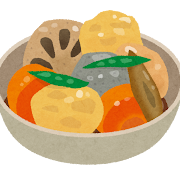
Meaning: A Clear Future
The lotus root has many holes.
This symbolizes being able to “see through” to the future without obstacles.
9. Tazukuri (田作り / Candied Sardines)

Meaning: A Bountiful Harvest
Historically, small fish were used as fertilizer for rice fields.
Eating them symbolizes a prayer for a great harvest and abundance.
10. Goboo (ごぼう / Burdock Root)

Meaning: Stability and Strength
Burdock roots grow deep into the ground.
It represents the wish for a family or business to have strong roots and stay stable.
Summary
Osechi-ryoori is more than just food; it is a “box of wishes” for the New Year. Each bite is a prayer for a better year ahead.
Which dish would you like to try?
🎁 Exclusive Invitation to Our Learning Community!
If you want to dive deeper into Japanese culture and master the language with our “15-minute method,” join our private community!
We are currently offering a 7-Day Free Trial of our Google Classroom.
Inside the Classroom, you will get:
-
PDF Worksheets (Vocabulary & Phrases)
-
Cultural insights explained in simple Japanese
-
Direct interaction and feedback from the teacher
-
A supportive community of Japanese learners
Don’t miss this chance to start your 2026 Japanese journey with us!
👉 [Join the 7-Day Free Trial Now]

関連情報